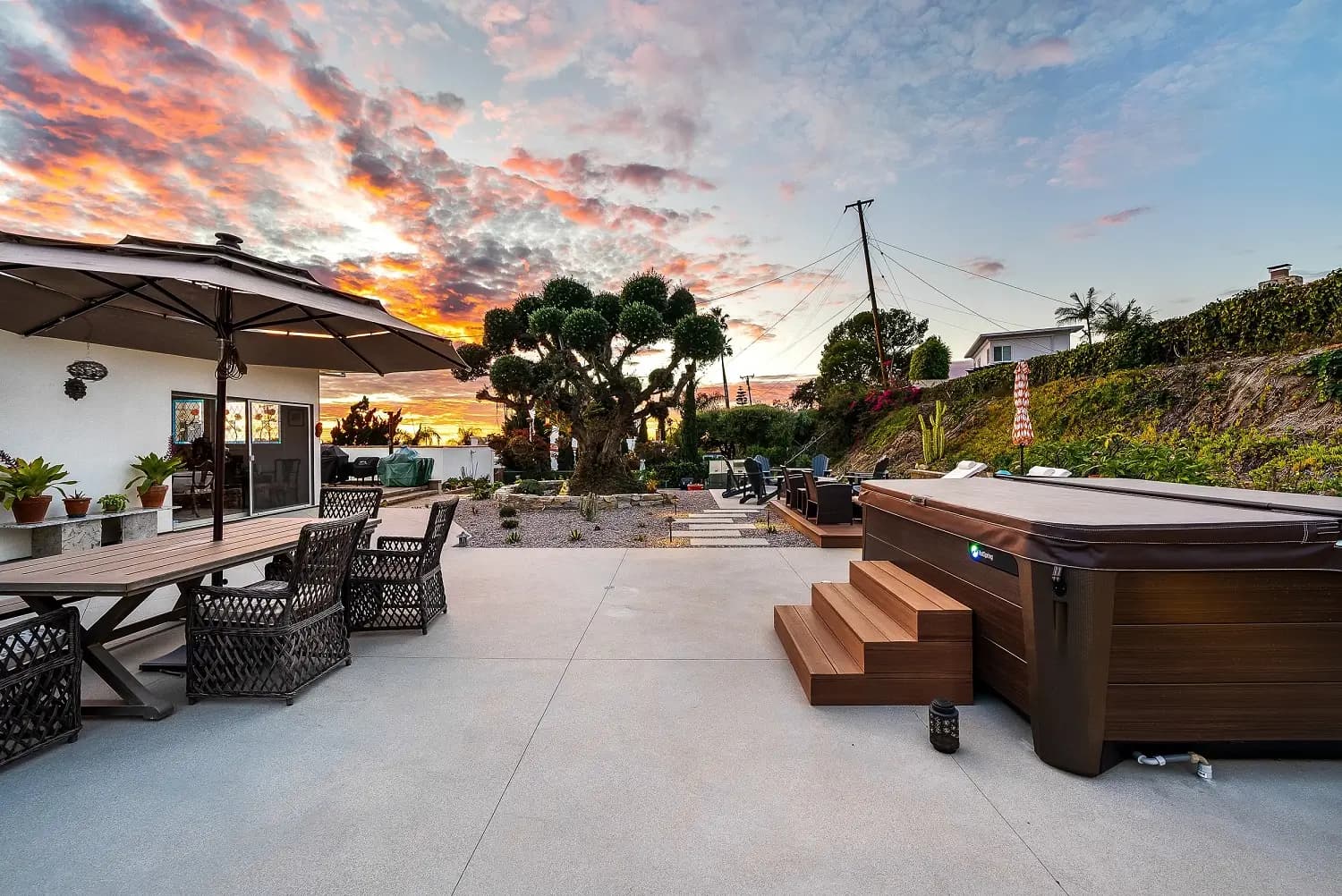
Residential
Hot Tubs, Saunas and Cold Plunges, Installed Right
A backyard recovery corner, fully installed: the pad, the dedicated circuit, the spa disconnect, GFCI protection, the permit, and a tub that's ready to fill.
Why hot tubs, saunas & cold plunges
The tub is the easy part
Buying a hot tub, sauna, or cold plunge takes an afternoon. Installing one properly is an electrical and structural job: a dedicated circuit sized to the equipment, GFCI protection, a code-required disconnect within sight of the tub, a pad that can carry thousands of pounds of water, and a permit that has to pass inspection.
On a recent Torrance job, the tub went under a covered patio on the far side of the house from the main panel. We installed new breakers in the main panel and a spa disconnect subpanel with GFCI breakers. Inside the house, the cable ran through the walls and under the floor. Outside, it ran in conduit bent to follow the house wall to the tub's junction box. Then we pulled the wire, landed every conductor, and wired the tub ready for water. The photos below follow that job from start to finish.
Placement decides whether you use it
A spa at the far end of the yard gets used in summer and forgotten in winter. We place hot tubs, saunas, and plunges close to the house, and close to each other if you're doing hot-cold cycles, as part of the overall backyard plan. See how this fits a full backyard on our outdoor living page, or read about a panel upgrade if your service is already maxed out.
What you get
Everything we deliver.
- 01
Hot tub electrical, start to finish
New breakers in the main panel, a subpanel with GFCI protection, a spa disconnect within sight of the tub, and the tub wired and ready for water.
- 02
Pads & placement
A filled hot tub weighs thousands of pounds. We pour or prepare a level pad that can carry it and place the tub where it's easy to walk to from the house.
- 03
Saunas
Indoor or outdoor saunas, barrel or custom-built, with the dedicated 240-volt circuit most electric sauna heaters need, plus ventilation and a dry, level base.
- 04
Cold plunges & ice baths
Dedicated circuits for chillers, a drained pad, and placement next to the sauna or spa so the hot-cold cycle is a few steps, not a walk across the yard.
- 05
Panel capacity checks
Before anything is ordered, we check whether your panel can carry the new load. If it can't, a subpanel or a panel upgrade comes first, not after the tub is delivered.
- 06
Built-in spas
Gunite spas built with a new pool or on their own, with the plumbing, heater, and automation that go with them.
From the field
A Torrance hot tub, wired from panel to tub.
Recent photos from current DECOMA jobs — in progress and finished, not stock.
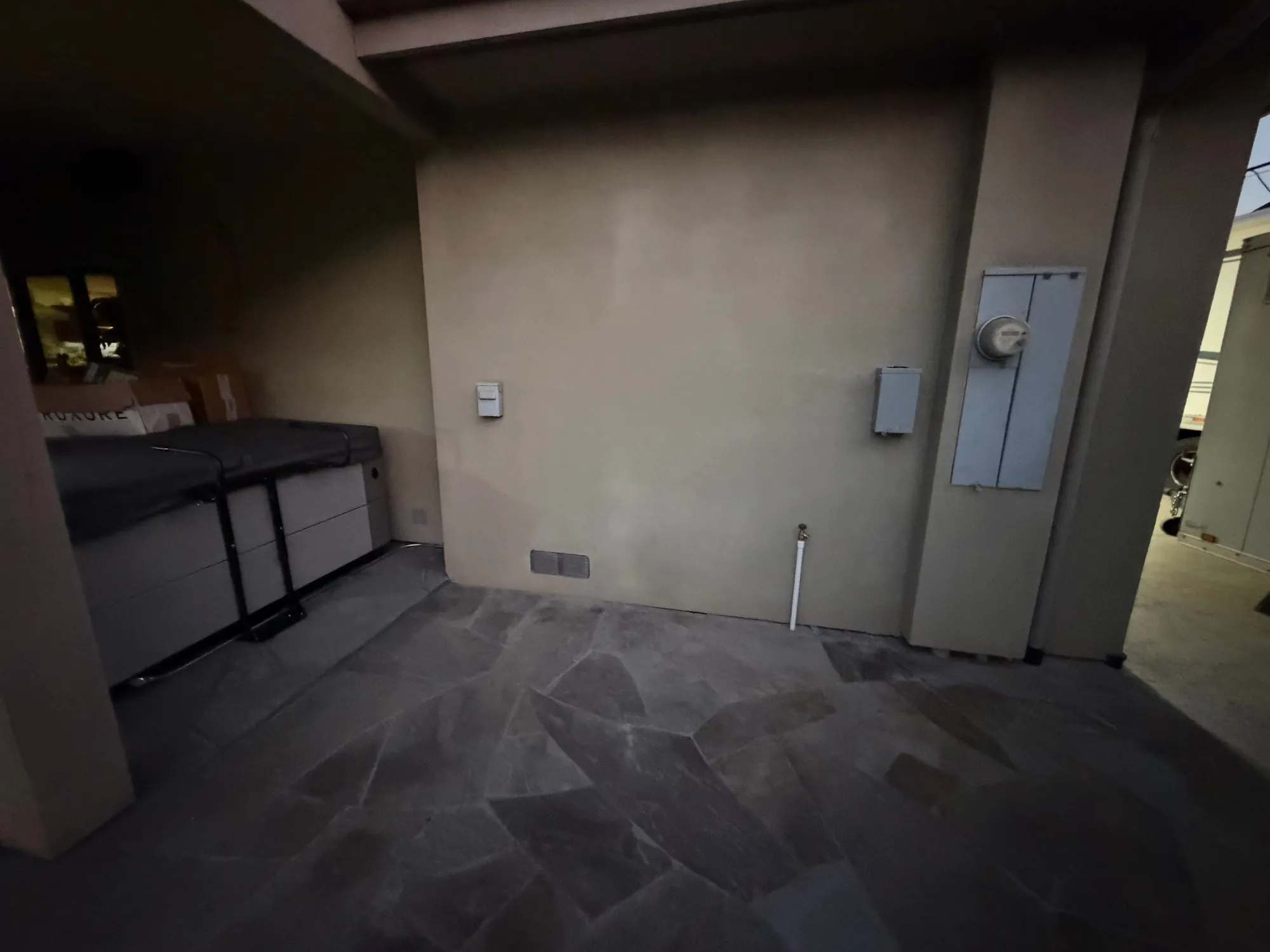
The finished spot: hot tub under the covered patio, disconnect within sight. 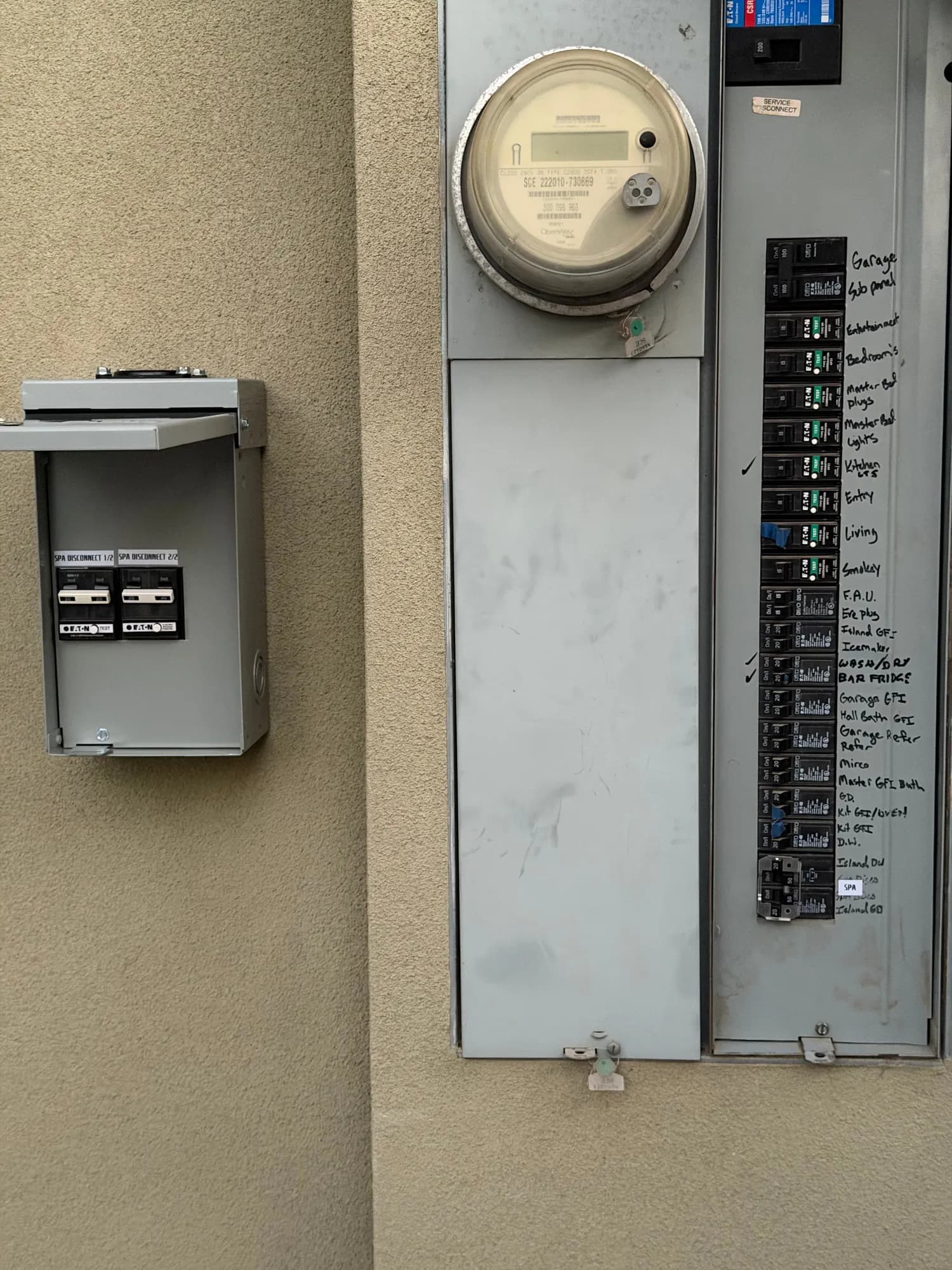
New breakers in the main panel, feeding the new spa subpanel. 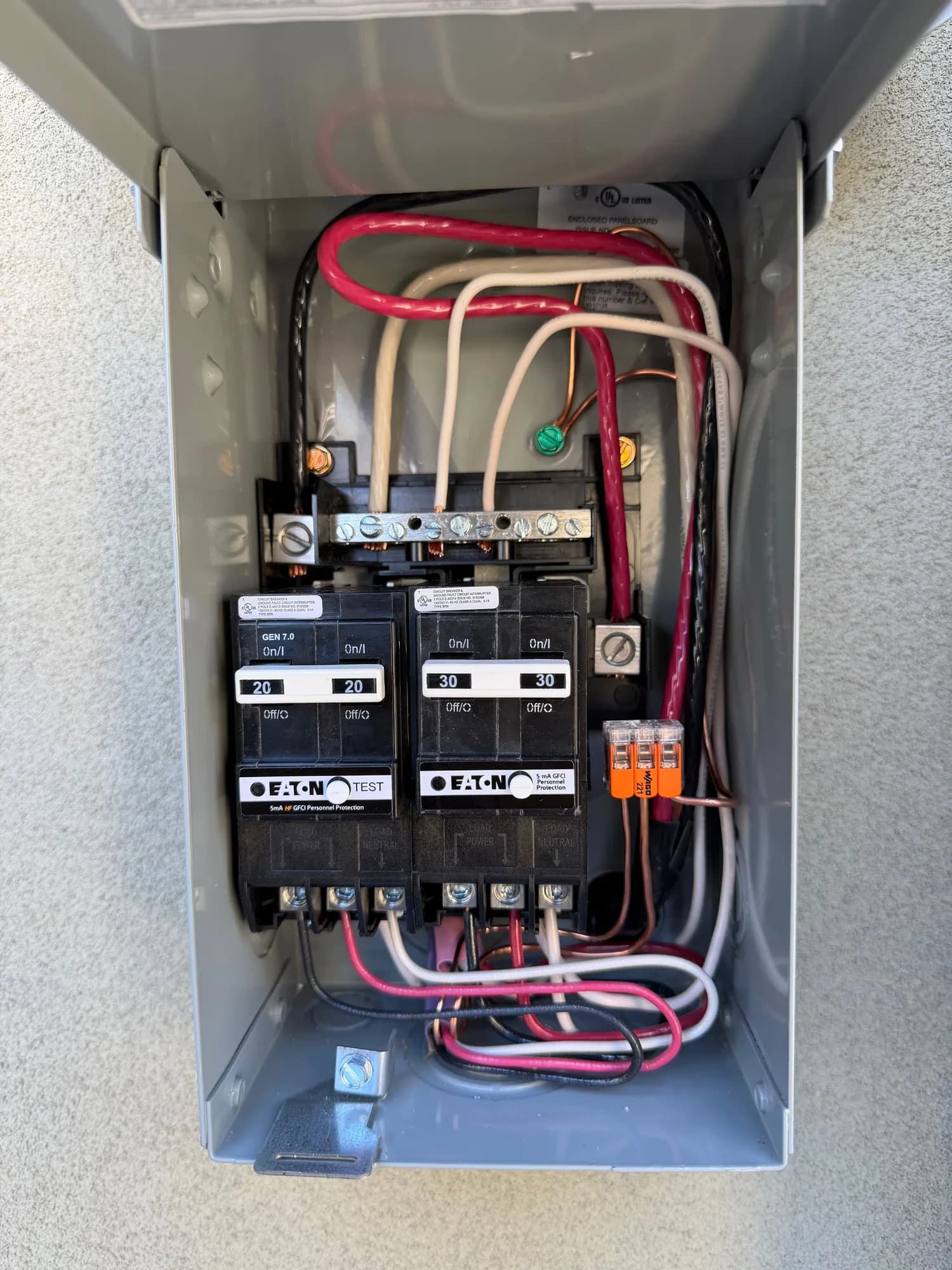
Spa disconnect with GFCI breakers, every conductor landed and torqued. 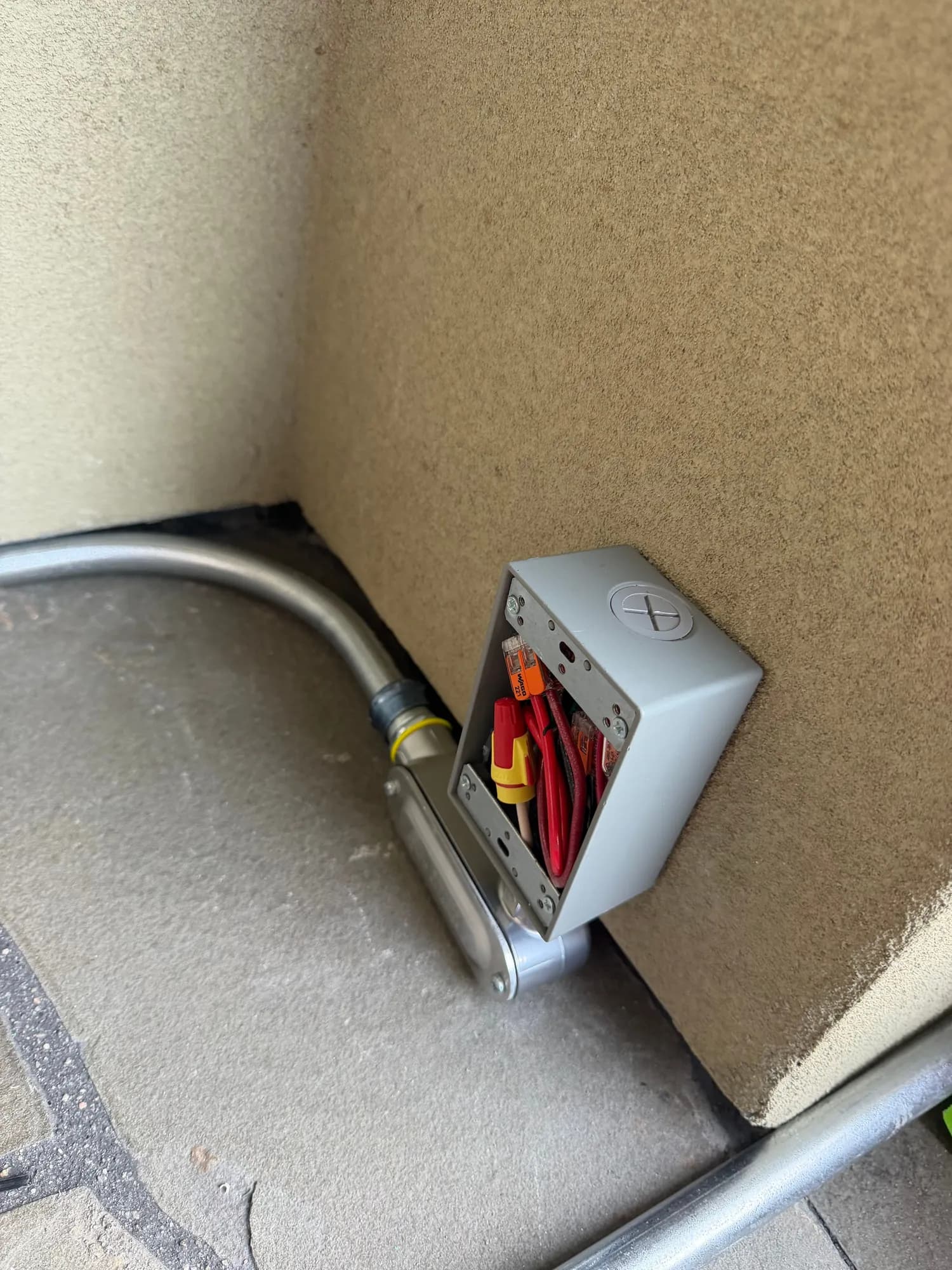
Conduit bent to follow the house perimeter to the tub, with no exposed cable. 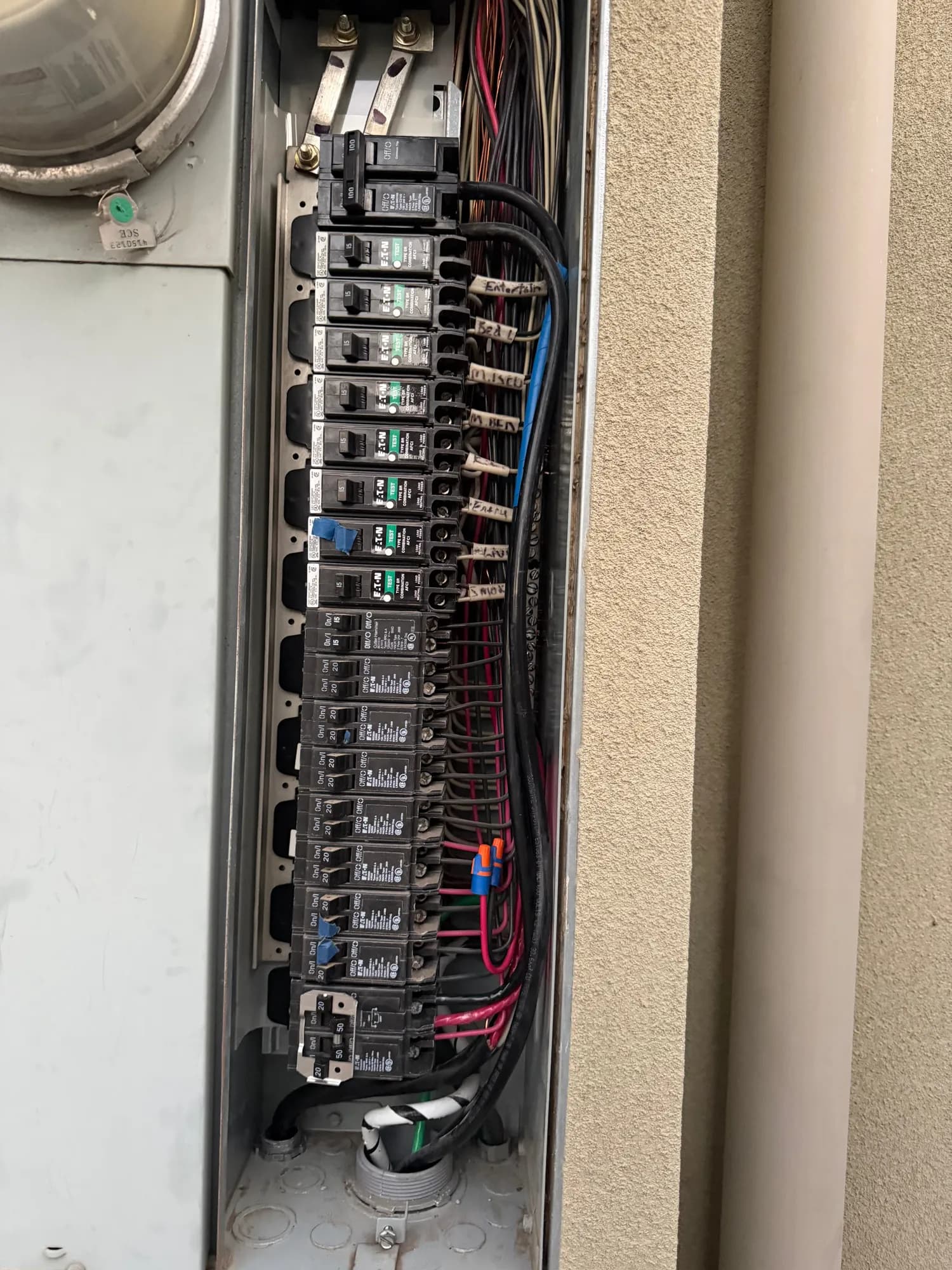
Main panel: new breakers installed and every circuit labeled. 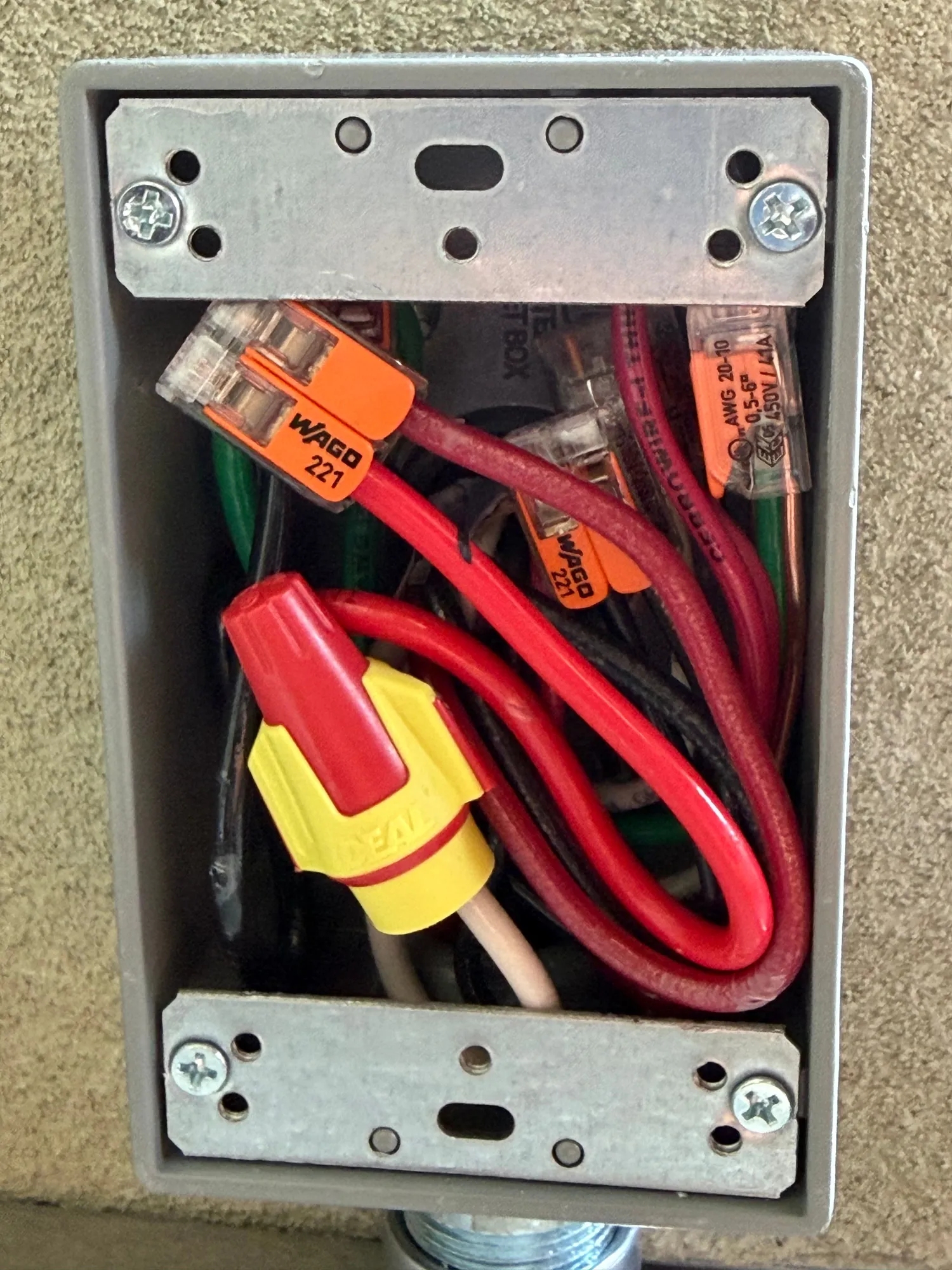
Weatherproof junction box at the tub. 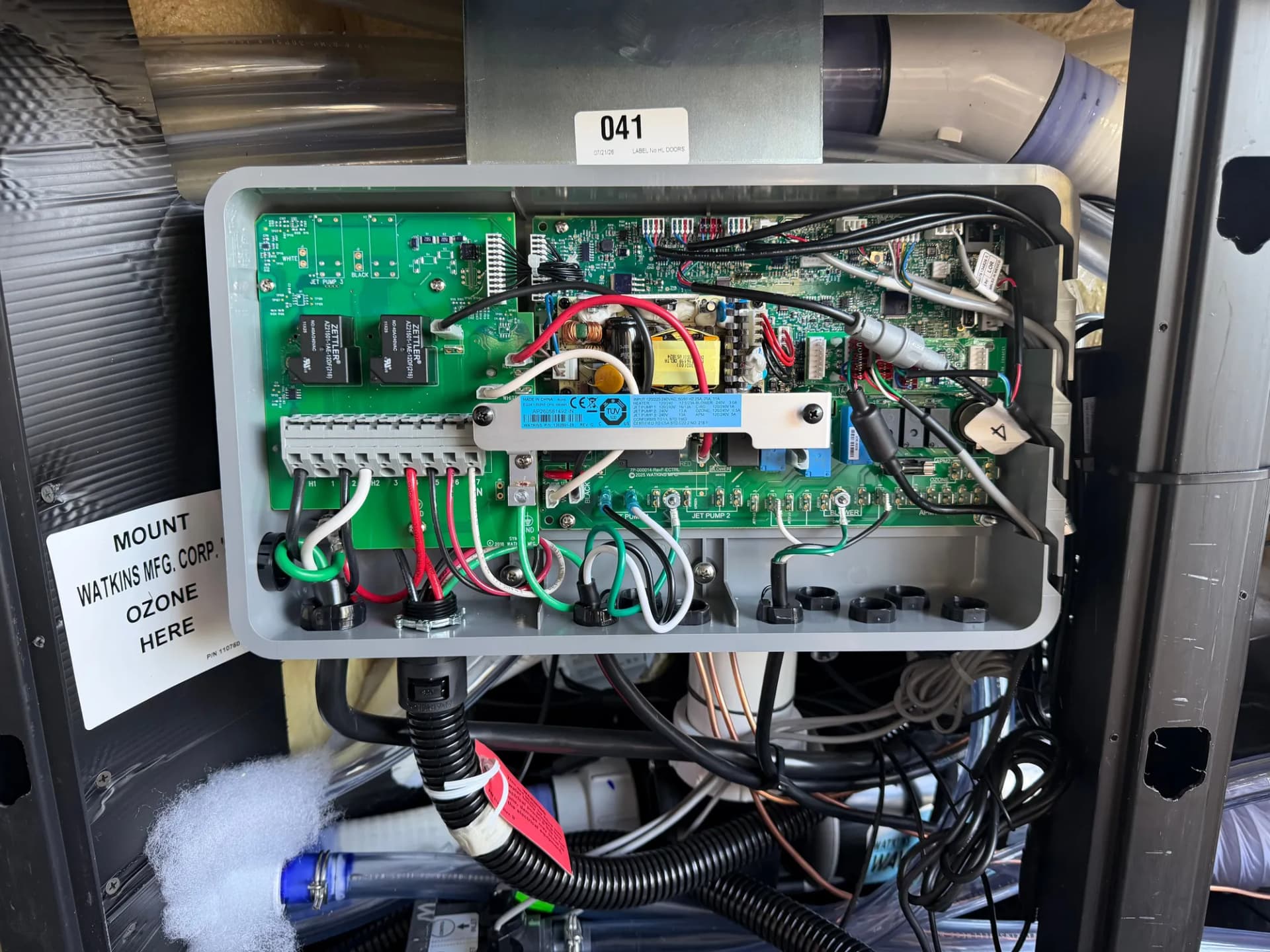
Tub control pack wired and ready for water. 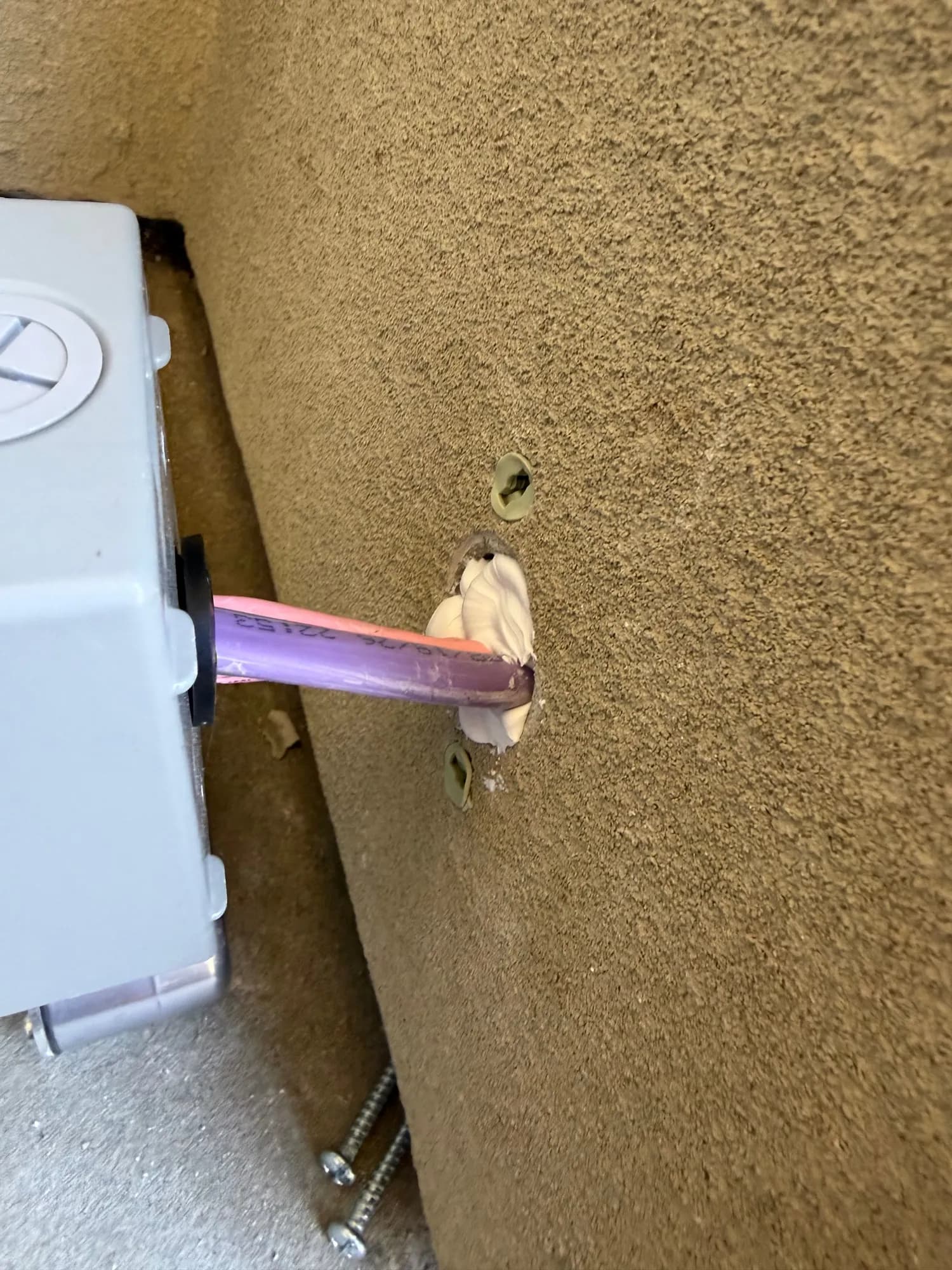
Wall penetration sealed against weather.
How we run it
Scope to sign-off.
01
Load & location
We check the panel's capacity, the tub or heater's electrical spec, and where it will sit, close enough to the house that you'll actually use it.
02
Permit
Electrical permit for the new circuit and disconnect, plus a building permit where a pad, enclosure, or structure is involved.
03
Pad & power
Pad poured or prepared, breakers and subpanel installed, wiring run through the walls and conduit outside, all inspected before the cover goes on.
04
Wire, fill & test
We wire the equipment, check the GFCI trips, fill the tub, and run it before handing it over.
Why DECOMA
One license, three disciplines, forty years.
Family-run South Bay general contractor since 1978. We design, build, and manage — under one license — so the team you start with is the team that hands you keys and the team that answers the phone when something needs fixing in year ten.
- Years building
- 48+
- Projects delivered
- 3,000+
- Repeat clients
- 300+
- CSLB Class
- A/B
FAQ
Common questions.
What electrical does a hot tub need?
Do I need a permit to install a hot tub?
My panel is full. Can I still add a hot tub or sauna?
What does a sauna or cold plunge need?
Can you install a hot tub on a deck?
How long does a hot tub install take?
Service areas
Hot tubs, saunas & cold plunges across the South Bay.
Born in Harbor City, working across LA County since 1978. Same crew, same license number, same shop at 25941 Frampton Ave, Harbor City.
Continue exploring
More from residential.
All of residentialTalk to a contractor
Tell us about your project.
One business day for a scope, timeline, and budget range. CSLB #375508 A/B.