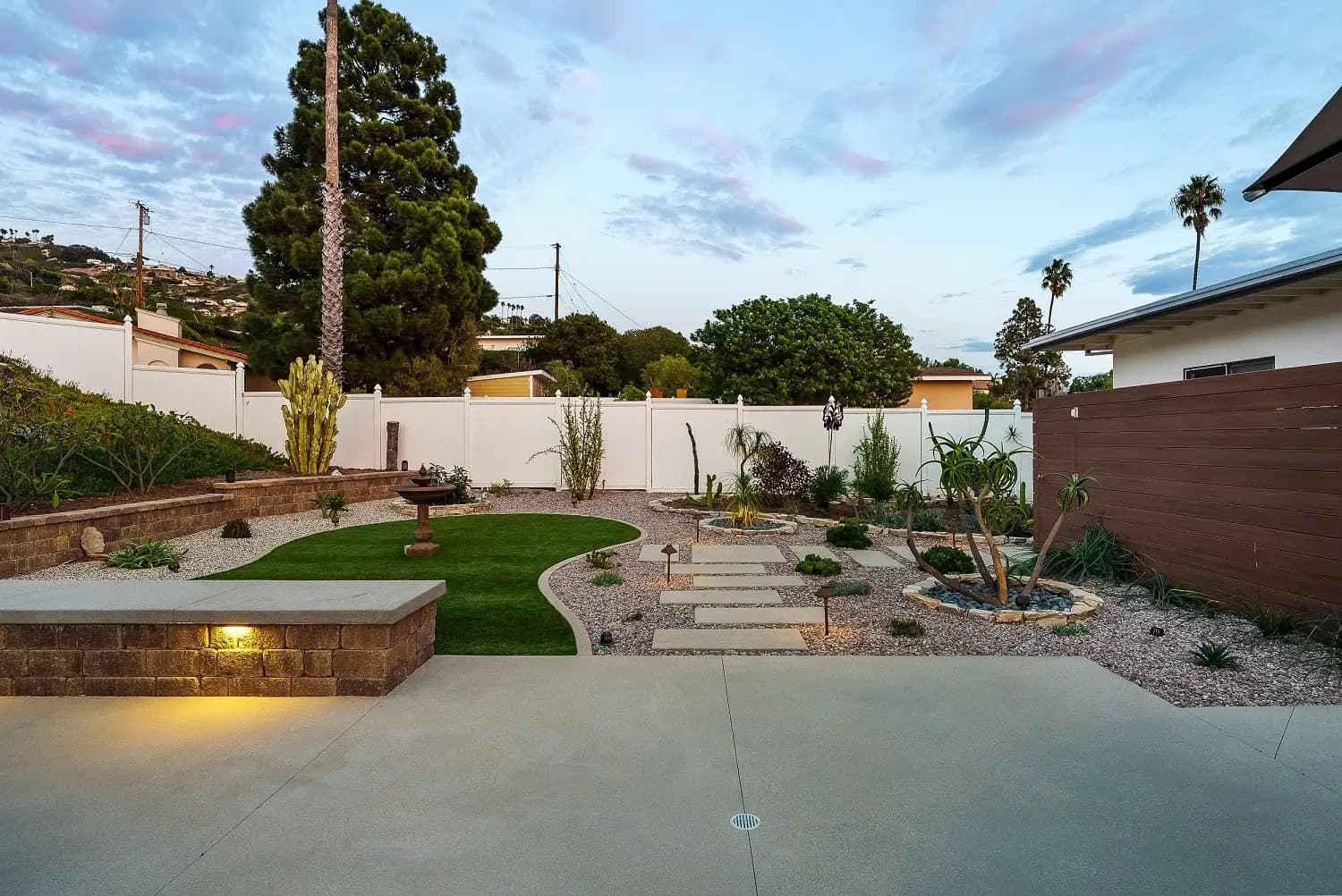
Rancho Palos Verdes is not a normal permit jurisdiction. The city sits on active landslide geology, plan review is contracted out to a third-party firm, and view-preservation rules from 1989 still govern what you can build above 16 feet. We run electrical work on the peninsula regularly, and the paperwork side takes longer than the wire-pulling side almost every time.
This post covers what we see on the ground: how the RPV plan check actually flows, where Edison bottlenecks hit, what the landslide moratorium means for a rewire or panel upgrade, and how we sequence exterior circuits so a deck or outdoor kitchen is energized before fall. If you are wiring a bluff-side patio in Portuguese Bend or upgrading a 100A panel in Miraleste, the process below is the one we run.
Where you file and who actually reviews the plans
Plans go through the city portal, but the reviewer is not city staff. Rancho Palos Verdes contracts plan check to Transtech, and corrections come back by email. That distance matters, because it means you cannot walk a set to the counter and argue a red-line in person the way you can in Manhattan Beach or Hermosa.
The Building and Safety office is at 30940 Hawthorne Blvd. Front-counter hours are Mon–Thu 7:30am–5:30pm and Fri 7:30am–4:30pm, and they close for lunch from noon to 1pm. Inspection requests go to a separate line. If you have a plan-review question, email is the channel that works.
Typical plan check for a straightforward electrical scope runs 2 to 4 weeks on the first pass. Revisions come back faster, but only if the corrections letter is answered cleanly. We annotate every red-line with a response note and a sheet reference, reviewers we cannot see in person appreciate that.
What triggers a permit vs. what does not
Anything beyond a like-for-like device swap requires a permit here. That includes any new circuit, any panel change, any service upgrade, and any EV charger install. Adding a subpanel for an outdoor kitchen or a deck-side hot tub is a permitted job, full stop.
The governing document is the California Electrical Code, based on NEC 2023 with California amendments. Service entrance sizing follows CEC Article 230-200A is standard for new construction, 400A for larger custom homes. Load calculations follow CEC Article 220, and this is where older RPV homes get stuck: the main breaker rating is not the same as available capacity.
We have pulled the cover on plenty of 100A panels in Seaview and Miraleste where the owner wants to add an EV charger, a heat pump, and an induction range on top of what is already there. The load calc says no. The panel upgrade becomes the project.
Edison coordination is the real timeline
Plan check gets a lot of attention, but the schedule killer on peninsula electrical work is Southern California Edison. A residential service upgrade, say from 100A overhead to 200A underground, runs 8 to 14 weeks from application to energization. That is not our timeline; that is Edison's queue.
Edison Rule 16 governs service upgrade triggers, transformer capacity, and service drop coordination. If your project needs a transformer bump or a new underground feed, you are in a longer line than a simple meter socket change. We file the Edison application the day the electrical permit is submitted, not after approval. Waiting costs weeks.
For deck and outdoor kitchen work that owners want done before fall, we work backwards. If you want circuits energized by October, the Edison application needs to be in by July. Plan check runs in parallel. The framing and rough-in follow.
The landslide moratorium and what it means for electrical scope
Portions of RPV sit inside a mapped landslide regulation area where new residential construction is prohibited. Under the landslide regulation ordinance adopted August 19, 2025, new residential construction is prohibited in the covered zones, including home additions. The covered areas are Portuguese Bend, Zone 2 Monks Lots and Zone 2 Non-Monks Lots.
What this means practically: if your parcel is in the moratorium area, you cannot add square footage or add a detached structure. You can, however, replace, restore and repair development within its existing footprint. A rewire of an existing house, a panel upgrade in the same location, a like-for-like subpanel replacement, those move forward.
Where we see the confusion is on exterior scope. A new detached deck with electrical, or a new outdoor kitchen structure, is a different animal than replacing an existing deck's circuits. Confirm your parcel's status before you draw anything. The city process for exclusion from the landslide area exists, but the findings threshold is strict.
Materials, methods, and what we spec on the coast
Salt air on the seaward slopes is aggressive. We spec 316 stainless for exposed hardware and Galvalume for exposed metal assemblies across the peninsula. On the electrical side that shapes fitting selection: raintight compression connectors, stainless straps on exposed EMT, and in-use covers rated for wet locations on every exterior receptacle.
Panels are typically Square D QO or Eaton CH, parts availability is good and inspectors know them. Branch circuits are copper THHN/THWN-2. Service entrance conductors over 100A are commonly aluminum SE/USE. GFCI and AFCI breaker coverage is required per CEC in kitchens, baths, garages, bedrooms, and outdoors, and RPV inspectors check those trip settings.
EV charger circuits are 40A or 50A 240V for Level 2. Title 24 Part 6 §150.0 requires one EV-ready space per dwelling on new residential construction. We rough in the conduit and the panel space even when the owner is not installing the charger day one, retrofitting later costs more than doing it once.
Sequencing a deck or outdoor kitchen before fall
The peninsula marine layer runs heavy through spring and early summer, which pushes exterior paint and stain windows into late summer. Owners who want their deck and outdoor kitchen finishes done before fall need the electrical rough-in complete before the finish carpenter and the stone mason arrive.
Our sequence: geotech and site work first, then structural framing, then electrical rough-in, then inspection, then decking and stone. If the outdoor kitchen has a 240V appliance run, most do, once you add an electric griddle or a beverage cooler, the subpanel decision happens at design, not at rough. We designed this way on our Palos Verdes project, where exterior circuits fed a covered outdoor room and had to be inspected before the ceiling closed up.
For a Valmonte-style hillside remodel, see our Valmonte Home build, exterior electrical was coordinated with the deck framer at the shop-drawing stage. Waiting until framing was up would have meant surface-mount conduit on finish woodwork.
FAQ
Do I need a permit to add a receptacle on my existing deck? Yes. A new circuit or a new receptacle on an existing branch circuit both require a permit in RPV. A like-for-like device replacement in the same box does not.
How long does a panel upgrade actually take from start to finish? Plan check runs 2 to 4 weeks. Edison service coordination runs 8 to 14 weeks in parallel. Field install and inspection is a few days once Edison is scheduled.
My house is in the Portuguese Bend moratorium zone, can I still rewire? Yes, within the existing footprint. Replace, restore and repair are permitted. New additions and new detached structures are not.
Can I install my own EV charger if I hire an electrician for the panel? Anything beyond a single device replacement requires a permit, and the permit is pulled by the licensed contractor doing the work. We do not recommend splitting the scope.
Who do I email with a plan-check question? buildingsafety@rpvca.gov reaches the city, and Transtech corrections come back through the same channel. Response time is faster than the front counter.