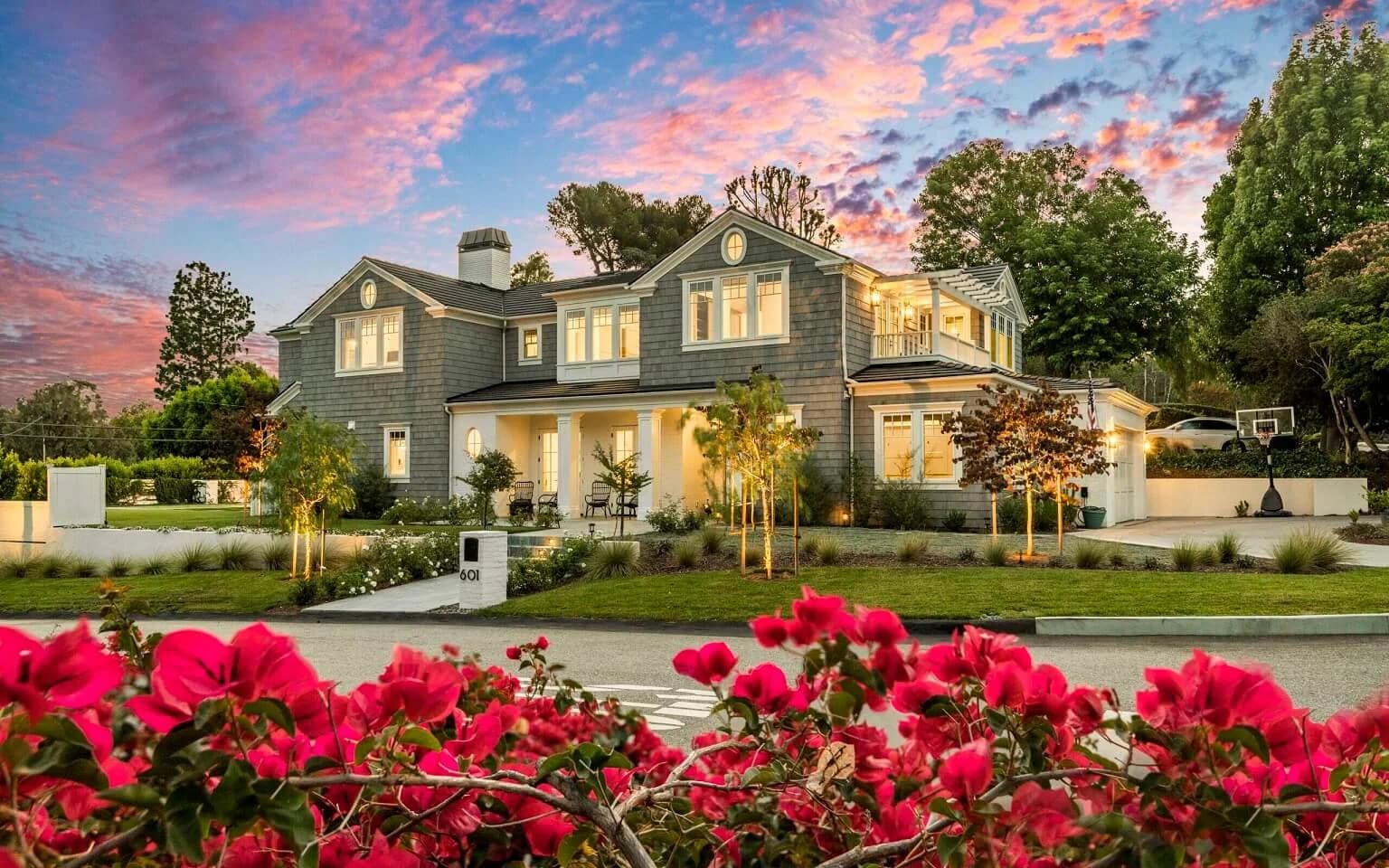
Palos Verdes Estates is not a flatland ADU market. The peninsula bluffs pull salt air across every exterior surface, marine layer sits on roofs into early summer, and the city runs an Art Jury review on any visible exterior change. That last one alone adds 4 to 8 weeks to the schedule.
We build ADUs across the South Bay, but PVE is the one where the material list gets rewritten. A galvanized fastener that lasts 25 years in Torrance will bleed rust down a stucco wall in Lunada Bay in under five. So when a client asks us to spec an ADU on the peninsula, we start with corrosion and architectural compatibility, then work back to code and budget.
This post walks through the material choices we make on a typical PVE detached ADU. It is not a cost guide. It is what we hand to our estimators before we sheet anything up.
Why the Standard South Bay Spec Fails Here
Most of our ADU work uses a familiar kit: Hardie panel siding, TPO single-ply roofing, mini-split heat pump HVAC, and a tankless gas or heat-pump water heater. That base list still applies in PVE, but the fasteners, flashings, and finishes around it all change.
The city's own climate notes call it out directly: salt-air corrosion is high on peninsula bluffs. We spec Galvalume roofing accessories and 316 stainless fasteners on any coastal exposure. Standard hot-dipped galvanized is not enough within about a half-mile of the bluff edge.
The other factor is wind. PVE sits in Exposure C inland and Exposure D on bluff edges per ASCE 7. Exposure D means higher design pressures on windows, siding attachment, and roof edge metal. It changes the fastening schedule, not just the material.
Roofing: What Actually Lasts Here
TPO is our default flat-roof membrane on ADUs, but on a PVE bluff lot we go to a mechanically fastened 60-mil system with stainless fasteners and Galvalume edge metal. The membrane itself is UV-stable; the failure points are always the terminations.
For pitched roofs, PVE's Art Jury pushes toward Mediterranean and Spanish forms. That usually means clay or concrete S-tile. We use copper or Galvalume valleys and stainless nails on tile battens. Painted galvanized valleys will streak within a decade here.
Rain totals are modest at 13.1 inches annually, so we are not designing for volume. We are designing for a slow, chronic wet-dry cycle from fog drip. Underlayment matters more than shingle warranty.
Siding and Exterior Cladding
Hardie panel remains our workhorse. It is coastal-rated, holds paint well, and the Art Jury accepts smooth-finish panels with the right reveal detailing when the massing reads Mediterranean.
Fastening is where we deviate from the manufacturer's minimum. We use 316 stainless ring-shank nails on any elevation facing the ocean or within the fog-drip band. On the inland elevations we still upgrade from standard hot-dip to a higher-grade coating. The premium on fasteners is small relative to the callback cost of rust bleed on a stucco or panel field.
For stucco elevations, we use a three-coat system with a stainless lath. Aluminum lath and standard galvanized lath both fail in this microclimate. The Art Jury will not care what is behind the finish, but you will care in year seven.
HVAC, Water Heating, and the Panel Question
Mini-split heat pumps are the default HVAC for detached ADUs. They are quiet, efficient, and meet Title 24 Part 6 without heroic envelope measures. Title 24 applies fully to detached ADUs, so this is not optional performance work.
The outdoor condenser location needs thought on a PVE lot. Salt air will eat a standard coated coil. We spec units with corrosion-protected coils and locate the condenser on a sheltered elevation where possible.
Water heating goes tankless gas or heat-pump. If the client is going all-electric, the heat-pump water heater plus an induction range plus HVAC pushes the panel demand hard. Edison panel capacity is a frequent pitfall, and 200A service is often required for a new electric kitchen plus heat pump. We check this before we finalize the electrical plan, not after.
Sewer lateral capacity is the other one that bites. Older peninsula homes often have 3-inch cast iron laterals that are undersized once you add ADU fixtures. If we find that, the lateral upgrade goes into the scope early. Discovering it during rough-in is the worst place to find it.
Art Jury, Setbacks, and What the State Law Actually Says
Every visible exterior change in PVE goes through Art Jury review. The city fee is $650 for that review. It is a real design conversation, not a rubber stamp, and Mediterranean and Spanish architectural compatibility is expected.
That said, state ADU law sets a floor the city cannot go below. Gov Code 65852.2 caps how strict local ordinances can be on standards. Setback from an existing structure has to be at least 4 feet per state ADU law, regardless of local zoning. We have won that argument at plan check more than once by citing the code section directly.
Fire-sprinkler triggers are worth flagging. If the primary residence has sprinklers, the ADU also requires them. That drives water-service sizing, which can drive a meter upgrade. Another chain reaction to catch during design, not construction.
What We Have Built Here
Our Palos Verdes project and the Valmonte Home both sit in this climate and both went through the city's review process. The material lessons in this post came out of those jobs and the punch lists that followed. Nothing on this spec sheet is theoretical.
Plan check in PVE runs 8 to 14 weeks per the city, with no expedited option available. Add the Art Jury window on top of that. A realistic ADU schedule on the peninsula is 16 to 28 weeks of construction after permits, so the total from signed design to certificate of occupancy is longer than most homeowners expect going in.
We would rather over-communicate that up front than compress it later.
FAQ
Do I really need stainless fasteners on an ADU that is not directly on the bluff? If you are within roughly a half-mile of the ocean or the top of the bluff, yes on any exposed exterior fastener. The fog and salt drift farther inland than people expect. The upcharge is small.
How long does Art Jury review add to my ADU timeline? Plan on 4 to 8 additional weeks on top of the standard 8 to 14 week plan check. Bring your elevations and material samples to the first submittal, not the third.
Can PVE make my ADU harder to build than state law allows? No. Gov Code 65852.2 is the state floor and local ordinances cannot impose stricter standards. That includes the 4-foot setback from existing structures. The city can still enforce Art Jury design review on the exterior appearance.
Is a heat-pump water heater a good idea in this climate? Yes, but locate it thoughtfully. It pulls heat from the surrounding air, so garage or utility-room placement works better than a tight interior closet. Check panel capacity before you commit.
Do I need a geotechnical report for an ADU? Depends on the site. PVE requires a geotech report for any cut or fill over 50 cubic yards or work in mapped landslide areas. Southern PV has active landslide overlays. Your civil engineer or our team can flag this early.